Why we exist
Provider, protector, vegan.
Ask most men what a man is for and you hear two jobs. Provide for the people who depend on you. Protect the ones who cannot protect themselves. We hold to both, and we think a man who takes them seriously today ends up vegan.
Provide
For most of history, feeding a family meant killing animals, and the man who did it well was doing right by his people. We no longer live there. The Academy of Nutrition and Dietetics, the professional body for dietitians in the United States, holds that appropriately planned vegan diets are nutritionally adequate and can offer long-term health benefits.1 The one thing to add is vitamin B12, which is made by bacteria and comes in a tablet.
So nothing has to die for a man to put a full table in front of his family. And providing was never only about tonight’s dinner. It means being alive and capable at seventy for the people who count on you. In the large studies that follow vegetarians and vegans for years, they have less heart disease2 and less type 2 diabetes,3 and vegan men have less prostate cancer.4 The numbers are on the resources page.
…if he be really and seriously seeking to live a good life, the first thing from which he will abstain will always be the use of animal food.
Protect
A warrior is known by whom he defends and by what he refuses to do. The codes men have kept, from chivalry to the rules of engagement, draw the same line: no force against those who cannot fight back.
Animals on farms and in slaughterhouses cannot fight back. They are bred by force, confined, and killed young, and none of it is needed to feed us. If you have not seen it, watch Dominion, filmed with hidden cameras and drones inside working farms and slaughterhouses.5
There is nothing masculine about rape, murder or torture, whether the victim is a woman, a child or an animal.
Hurting someone who cannot resist has never taken strength. Paying a stranger to do it out of sight takes less. The strong thing, the thing our fathers’ idea of a man actually asks of us, is to stand between the vulnerable and whoever would harm them.
I hold that, the more helpless a creature, the more entitled it is to protection by man from the cruelty of man.
The ground our children stand on
Protection reaches as far as the place our children will live. Oxford researchers linked the diets of 55,000 people in the UK to the footprint of their food and found that vegan diets produced about a quarter of the greenhouse gas emissions of diets high in meat and used about a quarter of the land.6
The same choice serves the people around us. A man who keeps his health stays present as a father, a husband, a friend and a leader. A community of such men has more to give.
Twenty-five centuries of precedent
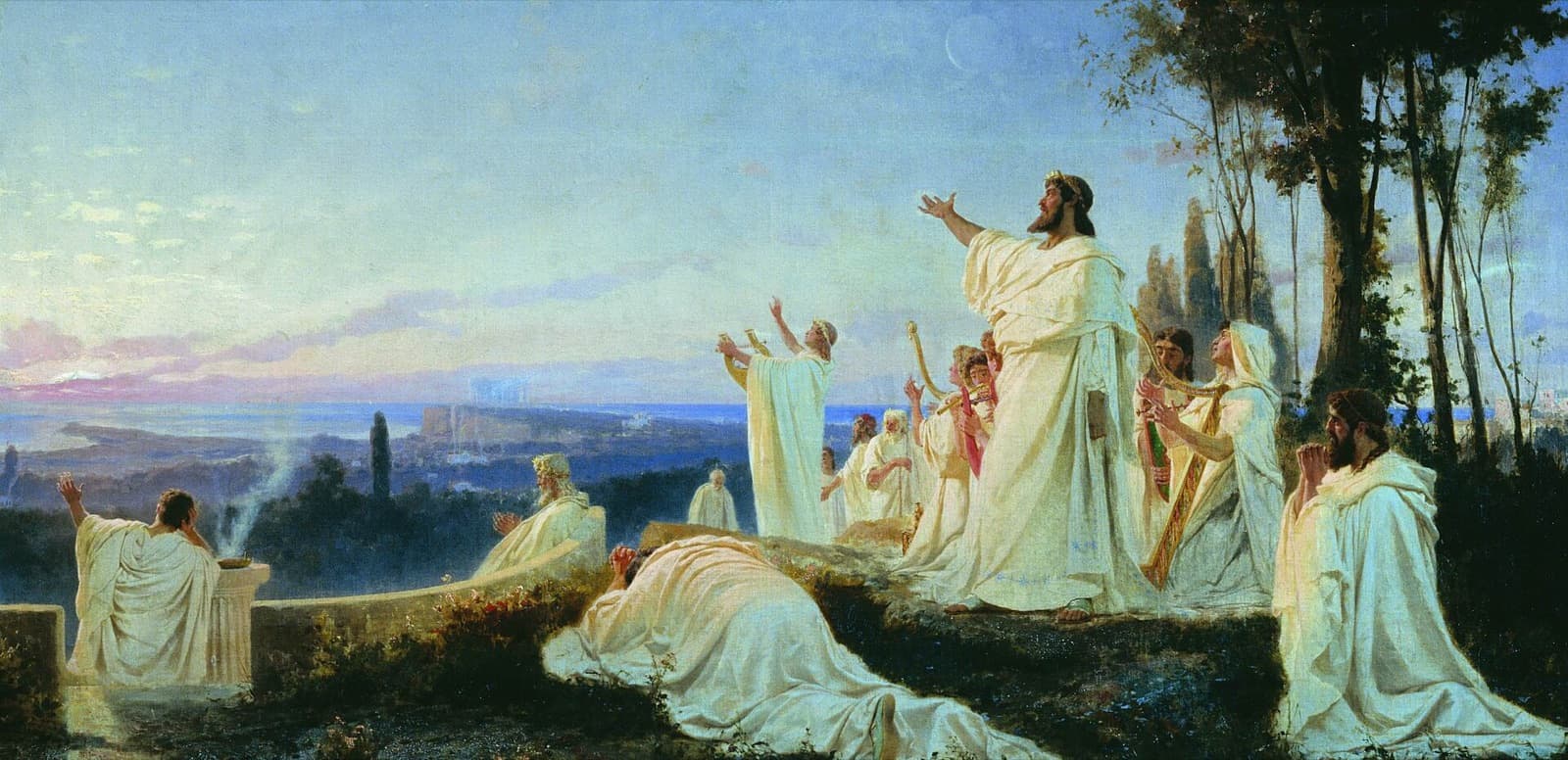
None of this is new. Around 530 BC Pythagoras gathered a community of students at Croton in southern Italy. His biographer Iamblichus records that a candidate was watched for three years and then kept five years of silence before he was admitted, and that Pythagoras ordered his most advanced students “never to eat any thing animated,” never to sacrifice animals, and “to preserve most solicitously justice towards them.”7 He asked the same of the lawmakers among his followers, on the grounds that a man cannot persuade others to act justly while he harms animals himself.
Ancient writers disagree about how strict the rule was for ordinary followers.8 The tradition that came down to us is clear enough: a brotherhood that studied together, held its members to a standard, and refused to harm animals. We are picking it back up.
Sources
- Academy of Nutrition and Dietetics, position paper on vegetarian dietary patterns for adults (2025)
- Crowe et al., EPIC-Oxford, American Journal of Clinical Nutrition (2013)
- Tonstad et al., Adventist Health Study-2, Diabetes Care (2009)
- Tantamango-Bartley et al., Adventist Health Study-2, American Journal of Clinical Nutrition (2016)
- Dominion (2018), Farm Transparency Project
- Scarborough et al., Nature Food (2023)
- Iamblichus, Life of Pythagoras, trans. Thomas Taylor (1818), chapters 17 and 24
- Stanford Encyclopedia of Philosophy, “Pythagoras”
- Leo Tolstoy, The First Step (1891), trans. Aylmer Maude
- M. K. Gandhi, An Autobiography, Part III, chapter 18, trans. Mahadev Desai
- Fyodor Bronnikov, Hymn of the Pythagoreans to the Rising Sun (1869). Public domain, via Wikimedia Commons